

Introduction
I remember the exact moment I understood the weight of intellectual inheritance. It was a Tuesday afternoon in Marty Semmelhack's office at Princeton, and I'd just presented my latest synthetic route, a clunky, fifteen-step monster that would make any practicing chemist wince. Marty listened patiently, then walked to his blackboard and began drawing. "You know," he said, sketching a much more elegant disconnection, "this is how Corey taught me to think about these problems."
E.J. Corey. The architect of retrosynthetic analysis. Nobel Prize winner. And suddenly, sitting in that cramped office surrounded by reaction schemes, I felt the invisible threads that connect one generation of scientists to the next. I wasn't just learning chemistry. I was inheriting a way of thinking that stretched back through decades of discovery.
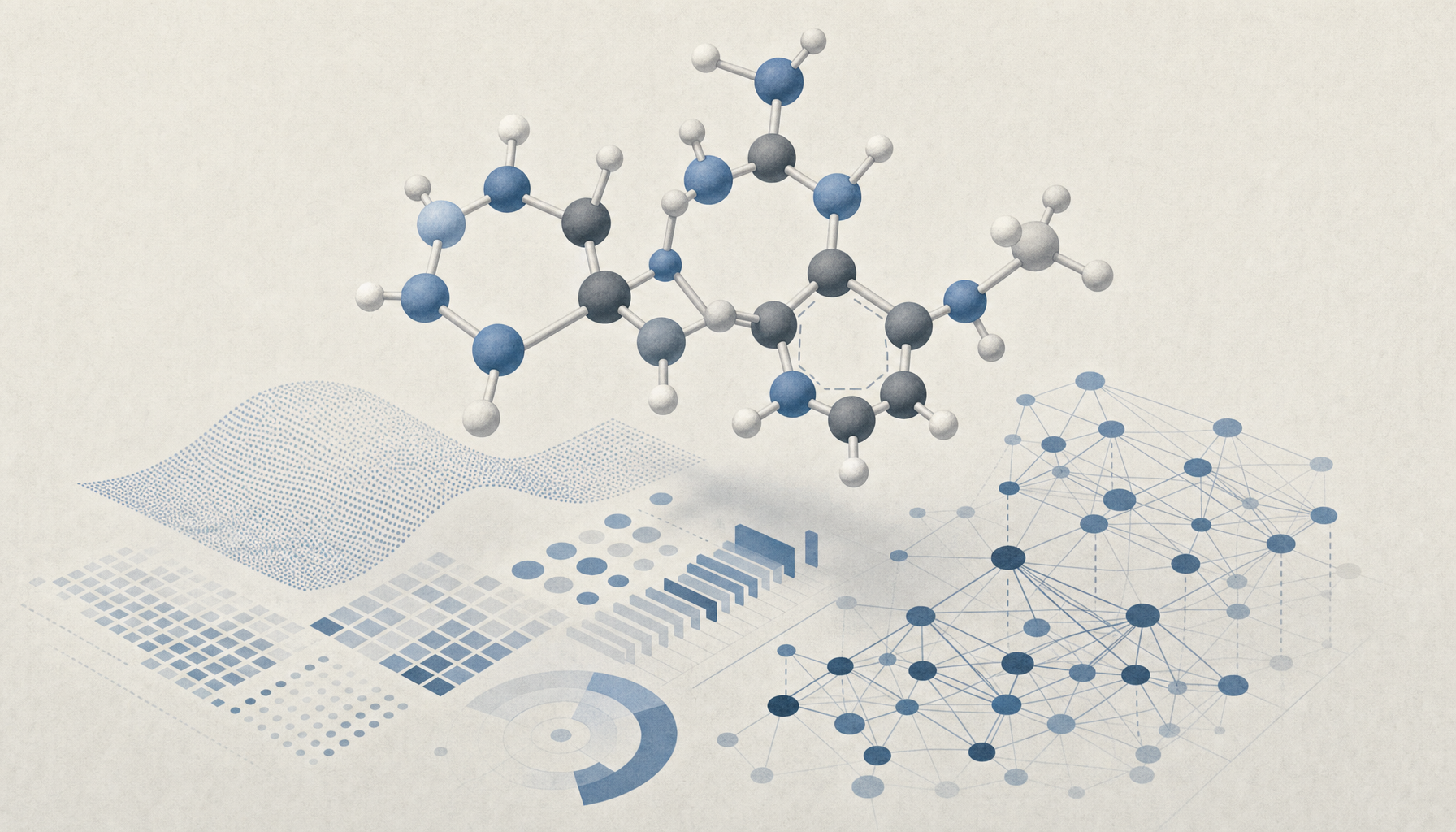
That realization would come to define not just how I approached science, but eventually, why I felt compelled to build Molekula.ai.
The Princeton Thread: From Semmelhack to Synthetic Mastery
Marty Semmelhack was more than my PhD advisor. He was my first glimpse into chemistry's intellectual genealogy. A master of organometallic chemistry, Marty had a way of making the most complex transformations seem inevitable. His true gift was teaching me to think backwards, to see the hidden relationships between molecular structure and synthetic strategy.
This perspective wasn't Martin's invention. It flowed directly from his training under E.J. Corey at Harvard, where retrosynthetic analysis was born. Corey revolutionized organic synthesis by teaching chemists to work backwards from their target molecule, breaking complex structures into simpler, more accessible building blocks. Before Corey, synthesis was often an exercise in chemical luck. After Corey, it became a strategic art.
Even Corey's insight had roots. His doctoral advisor was John Sheehan at MIT, the chemist who achieved the first total synthesis of penicillin, a feat so audacious that many thought it impossible. That makes Sheehan Marty's intellectual grandfather and mine. Sheehan's work proved that nature's most complex molecules could be recreated in the laboratory, establishing the philosophical foundation that would guide synthetic chemistry for generations.
Sitting in Martin's office that day, I could feel this lineage flowing through our conversation. The way he dissected my synthetic problem, the questions he asked, the solutions he suggested: all carried the DNA of discoveries made decades before I was born.
The Caltech Connection: Grubbs and the Art of Catalysis
My postdoctoral years with Bob Grubbs at Caltech deepened this understanding. Grubbs, who would win the 2005 Nobel Prize for developing olefin metathesis, had a different intellectual style than Martin. Where Marty was contemplative and strategic, Bob was intuitive and experimental. He had an almost mystical ability to sense when a reaction was "right," when the conditions, substrate, and catalyst aligned to produce something unexpected and clean.
This intuition wasn't accidental. Bob had learned it from Ronald Breslow at Columbia, a pioneer in bioorganic chemistry who taught the world how small molecules could mimic the behavior of enzymes. Breslow understood that chemistry wasn't just about making bonds. It was about understanding the subtle interplay of structure, energy, and environment that makes life possible.
Breslow himself had been shaped by R.B. Woodward at Harvard. Woodward remains, decades after his death, the standard against which synthetic ambition is measured: a chemist whose total syntheses of strychnine, reserpine, chlorophyll, and vitamin B12 weren't just technical achievements but acts of imagination that permanently expanded what the field believed was possible. His influence on everyone who trained downstream of him is hard to overstate precisely because it operates below the level of conscious technique.
Working with Bob, I began to see how Woodward's sensibility had filtered down through generations. The way Bob approached a stubborn reaction, the patience he showed with failing experiments, the sudden insight that would crack open a seemingly impossible problem: all bore traces of an aesthetic that had been transmitted through Breslow's teaching and Bob's own synthesis of those lessons.
The Living Transmission of Ideas
What struck me most profoundly during these years was how scientific knowledge really travels. It's not just through papers and textbooks, though those matter. The deepest understanding passes from person to person: in late-night lab conversations, in the way a mentor's eyes light up when discussing a particularly elegant solution, in the unconscious habits and assumptions that shape how problems are approached.
I watched Marty teach graduate students the same way Corey had taught him, not just the mechanics of retrosynthetic analysis, but the mindset that sees molecules as puzzles waiting to be solved. I saw Bob pass along not just catalyst protocols, but a philosophy of controlled reactivity, a belief that selectivity was always achievable if you understood the system well enough.
These weren't just academic exercises. Each conversation, each critique of a synthetic strategy, each moment of shared excitement over an unexpected result was part of an unbroken chain of knowledge transmission stretching back through the giants of 20th-century chemistry.
Building Molekula
Today, as I work on Molekula.ai, I keep thinking about a conversation I had not long ago with a graduate student at a mid-sized state university, no Nobel laureates in his department, no one to sketch an elegant disconnection on a blackboard. He was spending the better part of three days a week searching the literature, trying to determine whether anyone had explored a particular synthesis pathway. Not three days in the lab. Three days searching.
That's the problem with intellectual inheritance as it currently works. The chain is real, and it's powerful, but it's also narrow. For every student fortunate enough to sit in the kind of office I sat in, thousands of others read the same papers, memorize the same reactions, and never encounter the deeper logic (the pattern recognition, the strategic instinct) that makes a great chemist's approach feel inevitable rather than improvised.
Molekula is my attempt to widen the chain. Not to replace what happens between a mentor and a student (that human transmission can't be replicated), but to make the reasoning patterns, the strategic instincts, and the accumulated judgment of generations of exceptional chemists available to anyone working on a hard problem, anywhere.
This isn't a small ambition. The same kind of thinking that Corey passed to Semmelhack, that Semmelhack passed to me, should be available to a PhD student in São Paulo or Nairobi or rural Ohio who will never have the luck of the right advisor at the right institution. The scientific knowledge exists. The question has always been access.
Conclusion
Martin's sketch on that blackboard took about forty-five seconds. It changed how I thought about synthesis for the rest of my career.
I've wondered since how many chemists never got that forty-five seconds. How many more elegant disconnections went undrawn because the right person simply wasn't in the room.
That's the question Molekula is built to answer.
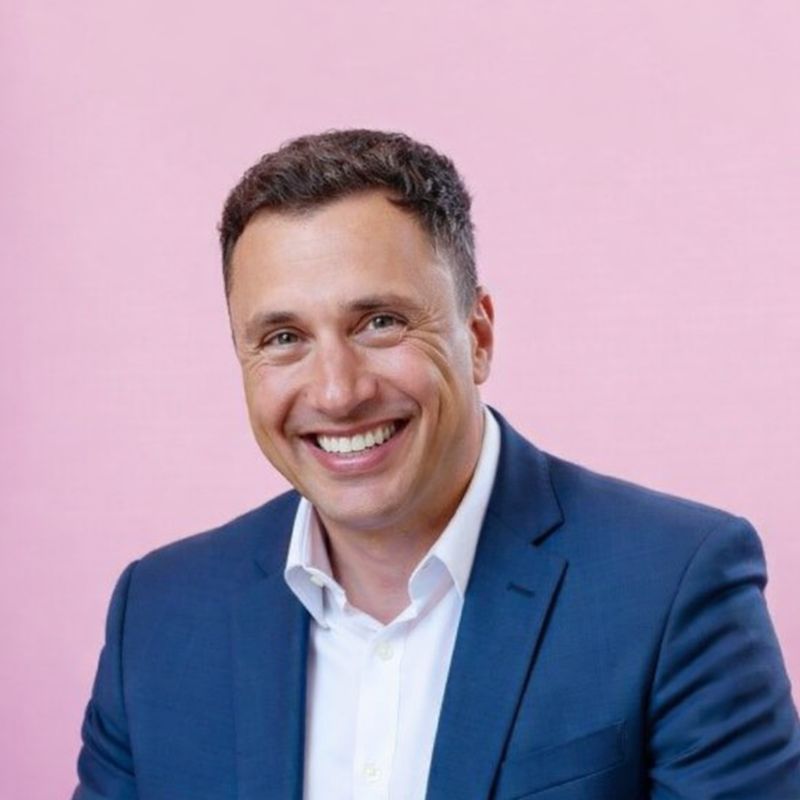
Anatoly Chlenov, PhD is the founder of Molekula.ai. He completed his PhD at Princeton, his postdoc at Caltech under R.H. Grubbs, and spent twenty years in industry before founding Molekula in 2025. Beta access is available at molekula.ai.