
Twenty years ago, I thought my career path was mapped out. PhD from Princeton in organic synthesis, postdoc at Caltech under Bob Grubbs working on olefin metathesis catalysts, then into teaching and eventually a research career somewhere respectable. The trajectory seemed clear enough.
What I didn't anticipate was how spectacularly wrong I'd be about what the world actually needed from chemistry.
The First Detour
The first crack came during my time at Stanford, where I was teaching organic chemistry in the Continuing Studies department. I loved the work. But something felt disconnected. We were discussing elegant synthetic problems while pharmaceutical companies down the road were drowning in data they couldn't effectively use. When Marty Semmelhack and I co-founded Princeton Pharmaceutical Partners to build early informatics platforms, most people in my circle were skeptical.
My Princeton advisor called it career suicide.
It wasn't. It was the first time I understood that the most interesting chemistry problems weren't in the literature. They were in the gap between what the tools could do and what researchers actually needed to do. That gap turned out to be enormous, and it had almost nothing to do with synthesis.
What the Sales Floor Taught Me
At PerkinElmer, I made a transition that bewildered almost everyone who knew me: from field application scientist to sales. Friends from grad school treated it like a confession of failure. A Nobel laureate pedigree, and you're selling instruments?
I learned more about real chemistry problems in six months of customer visits than I had in years of academic seminars. Not because customers were smarter than academics, but because they had no incentive to make their problems sound interesting. They just told you what was broken. And what was broken, almost universally, was time. Chemists were spending the majority of their working hours on tasks that had nothing to do with discovery: manual literature searches, reformatting data, reconciling results across incompatible databases, writing reports about work they hadn't had time to finish because of the reports.
The instruments we sold were excellent. They were also, in a deeper sense, beside the point. The bottleneck wasn't measurement. It was everything around measurement.
I carried that observation through Bruker Nano, SC Labs, and Iridium Enterprises. Each role sharpened the same instinct: the best technical solution is worthless if it doesn't fit into how people actually work.
Applied Materials and Thinking at Scale
Applied Materials was a different kind of education. Working on cryogenic plasma etch processes for semiconductor fabrication, I was finally operating at industrial scale. We developed and patented a process that accelerated fabrication by a factor of ten. Real impact, measurable in production numbers.
But the lesson that stayed with me wasn't the patent. It was watching what actually made breakthroughs happen at that scale. It wasn't any single person's insight. It was the moment when the chemist who understood surface reactions, the engineer who understood plasma physics, and the process expert who understood manufacturing economics were all in the same room, talking to each other in a language they had slowly, painfully constructed together. Take any one of them out and the thing stalled. Put them together and it moved faster than anyone had predicted.
I started thinking about chemistry research the same way. The field had brilliant individual contributors everywhere. What it lacked was infrastructure for collaboration, for synthesis across disciplines, for one person's insight to reach another person working on a related problem three time zones away.
The Night the AI Surprised Me
The path to AI training was accidental. When opportunities came up with Outlier, then Mercor, then xAI, I thought of it as consulting work: teaching models to reason about organic chemistry, correcting errors, explaining why a proposed synthesis wouldn't work and what might work instead. It felt like an extension of the communication skills from the sales years.
Then something happened during a late session on stereochemistry problems. I was feeding the model a series of reactions it hadn't seen before, and it was predicting outcomes correctly. Not by pattern-matching to examples I'd given it. It was working through the underlying logic, making the same kind of spatial, mechanistic argument I would make, arriving at the right answer for the right reasons.
I stopped and stared at the screen for a while.
This wasn't a search engine. It wasn't a database. It was something that had developed genuine chemical intuition, the kind that takes graduate students years to build, and it was applying that intuition to problems it had never encountered. The errors it made were interesting, too: not random, but systematic in ways that pointed to exactly where human guidance could make the difference.
I had spent years thinking about the gap between what chemistry tools could do and what chemists needed. That night I began to think seriously about what it would mean to close it.
Why Now
I founded Molekula in 2025 not because AI was new but because something specific had changed. For years, AI in chemistry meant pattern recognition over large datasets: useful, but fundamentally different from reasoning. What shifted was the ability to handle context, to hold a complex problem in working memory and think through it rather than retrieve from it.
The graduate students I'd been watching struggle with literature searches for twenty years weren't going to be saved by a better keyword search. They needed something that could read the way a senior chemist reads: understanding what a paper is actually about, connecting it to other work, knowing what questions to ask next. That capability finally existed. It just hadn't been pointed at chemistry in a serious way.
Molekula is that attempt. Built on everything the long way around taught me: what chemists actually need, how solutions have to fit into real workflows, what it looks like when disciplines collaborate effectively, and what AI can do when it's trained by someone who has spent two decades watching the problem from every possible angle.
Conclusion
My Princeton advisor eventually came around. Not to the career path, which remained chaotic by any reasonable measure, but to the idea that the detours had been necessary. You can't build a tool for chemists if you've only ever been one kind of chemist. You need to have sold to them, worked alongside them, watched them fight with their own software at eleven at night before a grant deadline.
The gap I first noticed at Princeton Pharmaceutical Partners in the early 2000s is still there. It's just that we finally have the tools to close it.
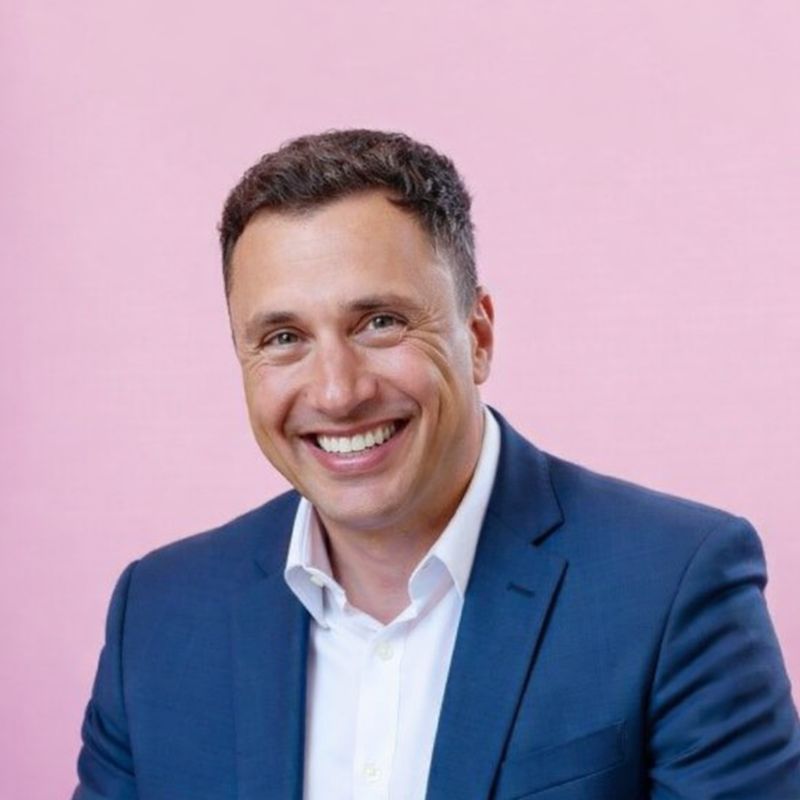
Anatoly Chlenov, PhD is the founder of Molekula.ai. He completed his PhD at Princeton, his postdoc at Caltech under R.H. Grubbs, and spent twenty years in industry before founding Molekula in 2025. Beta access is available at molekula.ai.